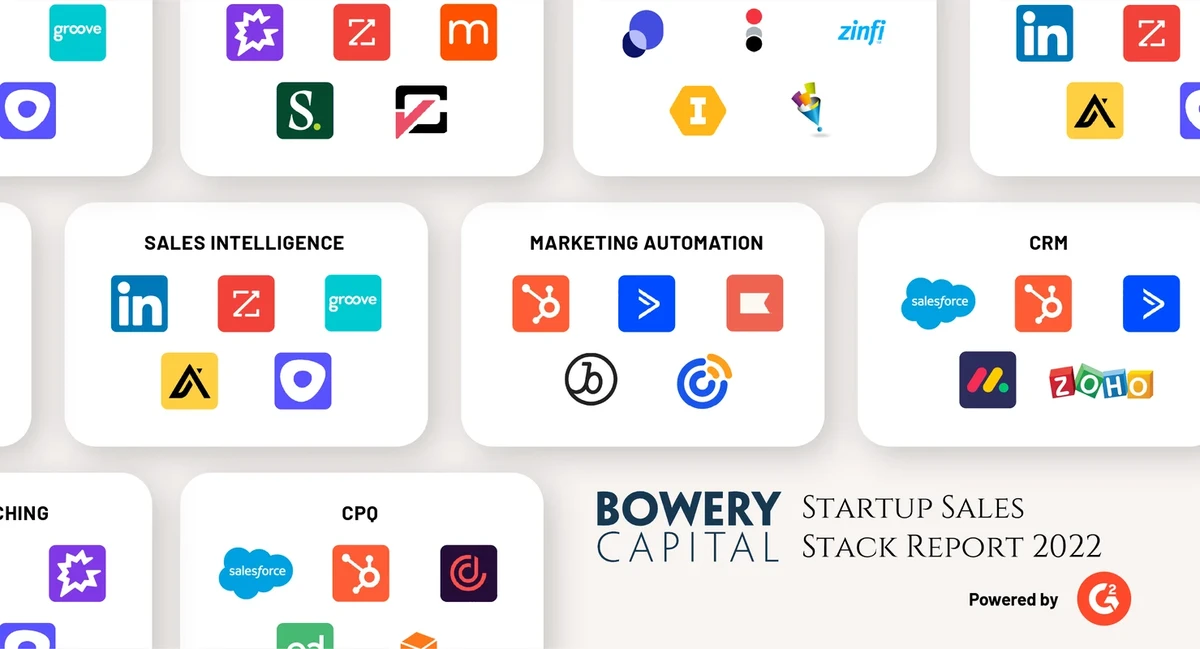
CRM marketing automation for startups is the practice of uniting pipeline management, event-driven communication, and cross-channel lead nurturing into a single operational system. Rather than relying on separate disconnected tools or manual spreadsheets, early-stage teams use automated workflows to qualify prospects, trigger timely messaging, and scale customer interactions without proportional headcount growth. Industry research highlights a stark operational divide: 97% of sales professionals consider sales technology like CRMs important or very important, yet only 65% actively use one, exposing an execution gap driven by legacy tool complexity. Choosing an appropriate architecture requires balancing rapid workflow deployment against budget realities and product delivery models.
What Distinguishes Startup CRM Automation from Enterprise Tools?
Startup CRM marketing automation replaces heavyweight enterprise record-keeping with lean, trigger-based communication workflows. Instead of requiring dedicated administrators, these platforms integrate contact tracking, automated drip messaging, and sales pipelines into an agile interface designed to eliminate manual data entry, prevent employee burnout, and accelerate conversion cycles on limited operational budgets.
Legacy enterprise suites function primarily as static databases built for auditing, managerial oversight, and quarterly reporting. These platforms demand specialized system administrators, custom code deployments, and months of internal training before sales reps send a single message. Early-stage startups cannot afford this administrative friction. When early teams must manually log call notes, copy-paste email responses, and update deal stages cell by cell, they lose time that should be spent speaking to buyers.
Performing repetitive, routine data entry leads directly to employee burnout and depresses business revenue. When founders and early revenue hires spend their working hours on administrative upkeep, top-of-funnel pipeline generation stalls. Automating standard touchpoints—such as logging inbound form submissions, assigning lead owners, and dispatching calendar links—protects early productivity and shields runway.
Adopting multiple point solutions early creates operational drag. Industry platforms like Insightly emphasize that complicating an early-stage company with too many distinct software vendors impairs growth speed. Maintaining isolated systems for email blasts, cold sequences, contact storage, and helpdesk tickets creates data silos, breaks tracking attribution, and results in redundant subscription fees. Modern startup platforms consolidate these capabilities into unified, lightweight engines.
Surviving the CRM Pricing Cliff and Contact Bloat
Most commercial CRM pricing structures scale on total contact counts, creating an aggressive pricing cliff that penalizes fast-growing startups. Entry tiers appear accessible: HubSpot Marketing Hub Starter begins at $25 per month per seat for 1,000 marketing contacts, while their Starter Customer Platform costs $15 per month per seat. However, when an organization outgrows basic tiers, the jump to HubSpot Marketing Hub Professional climbs to $890 per month for 2,000 marketing contacts and three seats. Additional marketing contacts incur steep incremental monthly surcharges.
This pricing structure generates an operational failure mode known as freemium contact bloat. When startups offer a self-serve trial or free product tier, thousands of non-paying users enter the application database. If the engineering pipeline automatically pipes every registered email directly into the CRM marketing contact list, the startup pays enterprise software bills for unengaged users who may never purchase.
Free and budget plans from major vendors impose severe technical constraints to compel upgrades. Platforms like HubSpot and other entry-level CRM providers offer free plans, but they enforce low contact limits, restricted reporting, and truncated automation triggers. EngageBay provides a free plan, but caps it strictly at 250 contacts, making it viable only for pre-launch validation or ultra-low-volume pipelines. Once a startup exceeds these limits or requires conditional branching, vendor fees surge.
Warning: Never route raw product user tables directly into commercial CRM marketing contacts. Store free-tier and trial accounts in an internal product database or data warehouse, and configure a reverse-ETL filter to sync only accounts displaying high-intent activation thresholds or Product-Qualified Lead (PQL) milestones into your billable CRM tier.
In addition to volume limits, early-stage operators face workflow bloat. Platforms designed for large corporations bundle extensive features that overwhelm small teams. Paying for enterprise governance, custom permissions, and nested lifecycle stages before establishing product-market fit drains capital that belongs in acquisition and engineering.
Architectural Fit: Matching CRMs to PLG vs. Sales-Led Models
A startup’s go-to-market strategy dictates its software requirements. A Product-Led Growth (PLG) model requires real-time synchronization between in-app behavioral events and communication channels. Conversely, a Sales-Led Growth (SLG) model demands pipeline visibility, multichannel sequencing (email, phone, SMS), and task automation to support outbound account executives.
The following comparison illustrates how leading CRM automation platforms serve distinct growth motions, pricing thresholds, and operational constraints.
Platform |
Primary Growth Model |
Starting Pricing |
Core Automation Strength |
Notable Trade-off or Limitation |
|---|---|---|---|---|
HubSpot |
Inbound / Hybrid |
$15–$25/mo Starter |
Comprehensive lifecycle stage automation and forms |
Steep price cliff to Professional tier ($890/mo) |
Attio |
Product-Led Growth (PLG) |
$36/mo |
Dynamic data models integrating app usage events |
Requires technical setup to pipe custom product events |
EngageBay |
Sales-Led / Small Business |
Free (250 contacts), $14.99/user/mo |
All-in-one marketing, sales, and support automation |
Trades deep customization for simplicity; low free limits |
Salesmate |
Sales-Led Growth (SLG) |
15-day free trial |
Multichannel sales sequences, voice calling, and SMS |
700+ app integrations, but lacks native product analytics |
monday.com CRM |
Operational Sales |
Tiered plans |
Visual pipeline tracking and cross-team task triggers |
Less specialized for complex event-driven behavioral emails |
Carefully evaluating how each tool structures contact data and automation triggers prevents costly mid-journey platform migrations.
The PLG Stack: Integrating Product Context with Attio
In product-led models, static contact properties like job title or company size are secondary to actual product usage. Attio addresses this requirement by combining internal CRM architecture with live product data. Teams gain real-time visibility across user journeys, enabling them to trigger automated outreach based on specific product milestones, such as workspace creation, API key generation, or team invites.
Attio paid plans begin at $36 per month, providing a scalable entry point for technical teams that manage custom data objects. Similarly, specialized behavioral messaging engines starting at $100 per month focus heavily on message orchestration powered by behavioral event streams. These setups ensure automated messages reflect exactly what a user experienced inside the application, rather than broadcasting generic time-based drips.
The Outbound SLG Stack: Multichannel Execution with Salesmate and EngageBay
Sales-led startups rely on direct human outreach supported by automated follow-ups. Salesmate caters to outbound operations by embedding phone dialers, SMS cadences, email sequences, and chat inside a unified interface. Supported by a 15-day free trial and connections across 700+ apps, it allows sales development representatives to execute multichannel cadences without manually switching screens.
For startups seeking minimal software sprawl, EngageBay consolidates CRM, email marketing, sales tracking, and customer support into a single dashboard. Starting at $14.99 per user per month billed monthly, EngageBay deliberately trades deep enterprise customization for day-to-day simplicity. For lean operations without dedicated RevOps specialists, this balance delivers functional pipeline execution without architectural overhead. Similarly, ConvergeHub consolidates sales, marketing, billing, and support under one umbrella, helping early teams avoid purchasing separate point solutions for invoicing and ticketing.
Emerging Contenders Redefining the Startup CRM Space
A new class of venture-backed companies is challenging traditional CRM designs by targeting specific operational workflows. These platforms eliminate horizontal bloat by focusing on contextual communication, real-time collaboration channels, and predictive intelligence.
Intercom, founded in 2011 in San Francisco by Ciaran Lee, David Barrett, Des Traynor, and Eoghan McCabe, has raised $240.8M in funding. While originally recognized for its conversational on-site messenger, Intercom has expanded into a full customer service and CRM marketing automation platform. Its automated workflows allow startups to trigger contextual in-app product tours, proactive onboarding chats, and support escalations based on live user sessions.
Other challengers target specific vertical friction points:
Pylon has raised $51.3M to redefine B2B support and account tracking. Recognizing that modern B2B startups manage client relationships directly inside shared chat channels and ticketing instances, Pylon bridges the gap between chat collaboration and traditional CRM record-keeping.
Optimove has raised $95M to deliver customer data transformation. It acts as an intelligent marketing hub that converts complex behavioral data into multi-channel campaigns. CRED, backed by $15M in funding, combines predictive intelligence with automated pipeline workflows to simplify revenue operations for lean teams.
How to Build Signal-Based Lead and Onboarding Journeys
Signal-based startup marketing automation executes customer journeys based on user actions rather than static form submissions. By linking CRM workflows to real-time events—such as product usage thresholds, onboarding milestones, or delays—startups automatically dispatch targeted emails, adjust lead scores, and alert account owners without human intervention.
Moving away from calendar-based cadences toward signal-based triggers improves deliverability and engagement. Constructing a resilient journey requires structured workflow mapping:
- Phase 1: Pre-Purchase Lead Qualification. Capture top-of-funnel activity and track high-intent behavioral actions, such as visiting the pricing page multiple times or exceeding usage limits. The CRM assigns dynamic lead scores based on predefined criteria, alerting account reps when an inbound lead crosses an engagement threshold.
- Phase 2: Purchase and Conversion Triggers. The instant an account upgrades, billing webhooks update the CRM record. This status change automatically removes the buyer from sales cadences, provisions account access, and begins onboarding communications without human intervention.
- Phase 3: Post-Purchase Activation and Milestone Tracking. The CRM monitors onboarding progress. If a customer fails to complete account setup within 48 hours, an automated prompt offers assistance. If setup completes successfully, the system delivers educational workflows tailored to the user’s specific use case.
- Phase 4: Operational Hand-off to Human Teams. Establish strict rules for when automation yields to human intervention. When a prospect schedules a call or replies directly to an outreach email, automation must instantly halt to prevent embarrassing duplicate messaging.
Determining when to rely on automated communication versus direct human touch depends heavily on account value. Berner, writing on scaling customer success, highlights the fundamental reality of setting up early customer operations:
I tell founders and leaders at growth-stage companies, ‘You have to start somewhere and be willing to change.’
Onboarding structures must remain flexible while preserving mandatory alignment steps. Berner explains that:
The details of that implementation are different depending on the product, but onboarding manuals should always include a kickoff call and a requirements gathering conversation
Workload capacity frameworks outline clear operational boundaries. Berner notes that “there are rules of thumb, mostly by segment. But it will depend.” Recommended allocations assign Customer Success Managers 5-10 accounts each when handling strategic accounts exceeding $500k in contract value. For SMB customer segments, an individual manager can handle 80-120 accounts. Startups must configure CRM automation to manage the bulk of touchpoints for SMB accounts, reserving manual intervention for high-value strategic pipelines.
Critical Automation Mistakes That Derail Early Growth
Automating broken or undefined processes magnifies operational flaws. Founders frequently introduce automation tools to compensate for unclear positioning or poorly organized sales materials, which accelerates churn instead of fixing root problems.
Pablo Rodríguez, Chief Growth Officer and Growth Manager at Founderz, points out the primary error startups make when integrating automated systems:
The root mistake is starting from “we want to use AI” instead of “we want to reduce wait times for shipping queries.” The point isn’t to adopt technology for its own sake, but to solve a specific problem.
To avoid this trap, founders should apply a disciplined implementation sequence: define a single high-volume, low-risk query; clean and prepare knowledge base documentation; pilot the automated workflow on a single segment; ensure clear human escalation paths from day one; and measure metrics weekly before expanding.
Eliminating human escalation paths causes severe customer friction. If an automated onboarding sequence fails to resolve a technical blocker and offers no routing to a team member, trial users abandon the product. Automated drip sequences should include visible reply-to addresses and calendar booking options.
Handoff failures between front-end marketing pipelines and fulfillment systems also damage early momentum. Capturing leads in a marketing CRM without synchronizing deal stages to operational delivery platforms leaves closed-won accounts stranded. Heavy enterprise systems illustrate this architectural distinction: while they help scaling teams coordinate post-sale delivery and reporting across complex internal operations, they are unsuitable for early startups seeking their initial sales CRM.
Finally, startups must protect sending domain reputations. Running high-volume outbound cold prospecting through the same primary domain used for CRM marketing automation and transactional receipts invites deliverability disaster. If outbound cold emails generate spam complaints, your primary domain risks blacklisting, causing critical onboarding messages and password reset notifications to land in user spam folders. Maintain distinct secondary domains for cold outreach, while configuring proper SPF, DKIM, and DMARC authentication on primary marketing domains.
Shortcut: Implement a universal CRM suppression tag (e.g., in-active-dialogue). Configure every marketing sequence and drip trigger to pause immediately whenever this tag is applied, and use webhooks to attach the tag automatically the second a prospect books an intro call via your scheduling link.
FAQ
How can early-stage startups prevent freemium contact bloat in their CRM?
Startups should avoid syncing every free-trial signup directly into their CRM marketing tier. Instead, store raw product users in an internal database and use reverse-ETL triggers to pass only product-qualified leads (PQLs) into the CRM to avoid escalating beyond contact caps.
When should a startup transition from founder-led outreach to automated sequences?
Automate routine outreach touches once messaging patterns are validated, but implement a tag-based pause mechanism. This ensures automated marketing journeys instantly halt the moment a prospect books a call or exchanges a personal two-way email with a founder.
What is the primary difference between PLG and SLG CRM architectures?
PLG CRM architectures (such as Attio) center on real-time application usage and product events to trigger contextual onboarding. SLG CRMs (such as Salesmate or ConvergeHub) focus on sales pipelines, outbound dialers, manual stages, and multichannel sequences.
Why do startups struggle with free CRM marketing tiers?
Free tiers on platforms like HubSpot or Zoho impose strict limits on total contacts, restrict automated trigger logic, and strip advanced reporting, forcing companies into expensive upgrades once lead volume grows.